
Project: Green Hydrogen
About the
Project
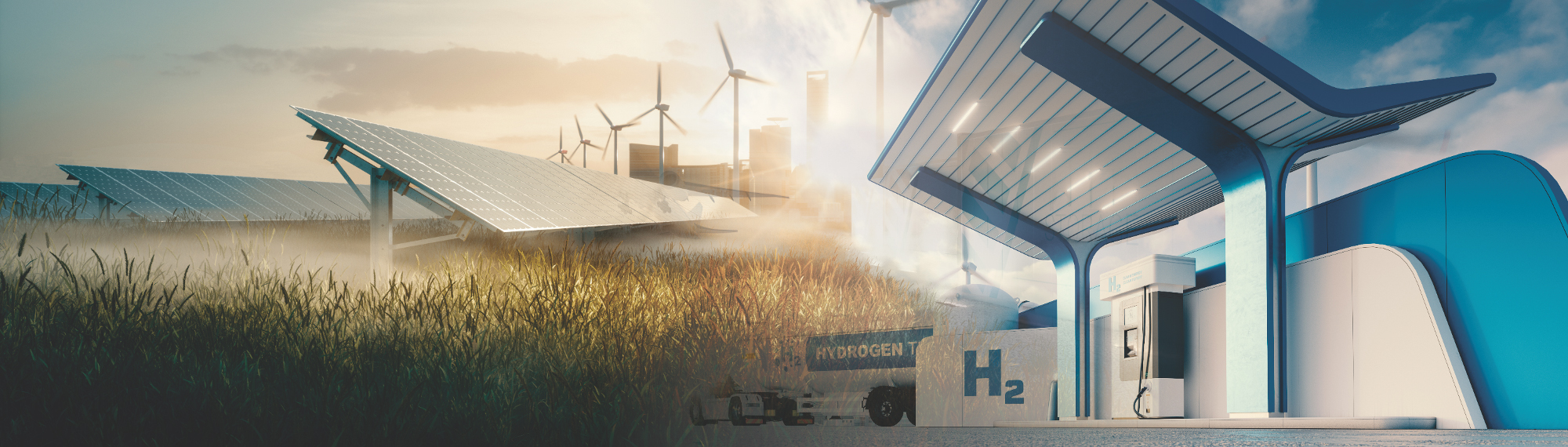
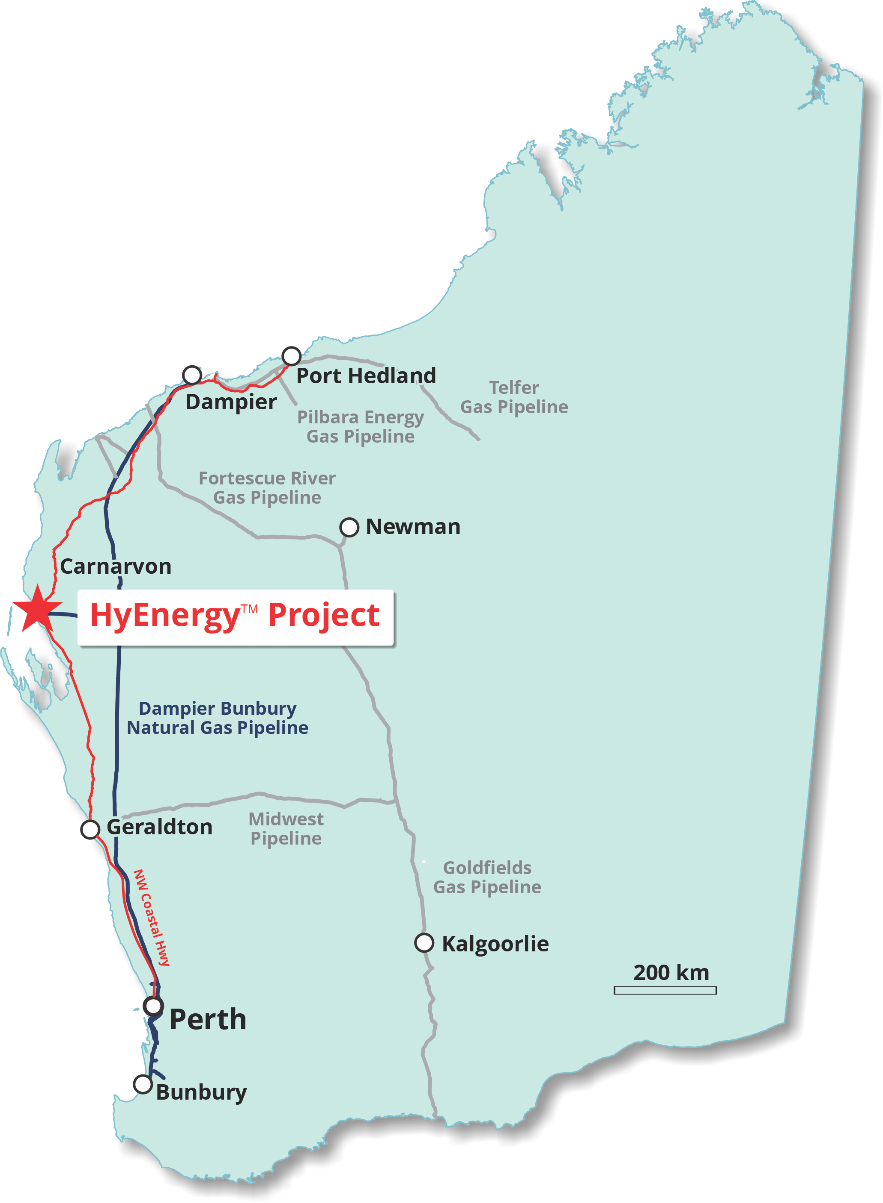
World class wind and solar resources of the Gascoyne Region within close proximity to key infrastructure provides potential for the establishment of a Renewable Green Hydrogen Project capable of supplying domestic and international markets
Extremely supportive government in emerging Green Hydrogen Industry set to fast-track projects
Western Australia’s Hydrogen Strategy to support renewable hydrogen industry with a goal of 10% mix of renewable hydrogen in the DBNGP by 2030.
Our green hydrogen project in Western Australia is a globally significant development which would supply green hydrogen to domestic and international markets.
Using abundant wind and sunlight from the Gascoyne region we will produce hydrogen which is free from any carbon emissions.
Green hydrogen will become a key ingredient in the global energy mix as the world seeks to achieve net zero greenhouse gas emissions by 2050.
We also explore for vital minerals for the transition to green energy including vanadium, cobalt, nickel, copper and gold.
A commitment to maintaining high environmental, social and governance standards is at the heart of all our activities.
Vision
Mission
Goal
The Opportunity
Growing
Demand
Australia’s potential zero carbon hydrogen exports could reach $2.2 billion by 2030 and $5.7 billion by 2040.
Global Carbon Zero
Western Australia to support international decarbonisation efforts, while also supporting Australia’s commitments to the Paris Agreement.
Supportive Government
The COAG Energy Council has approved the development of a National Hydrogen Strategy.
How Do You Make Green Hydrogen?
Aiming to be a significant truly zero carbon green hydrogen project
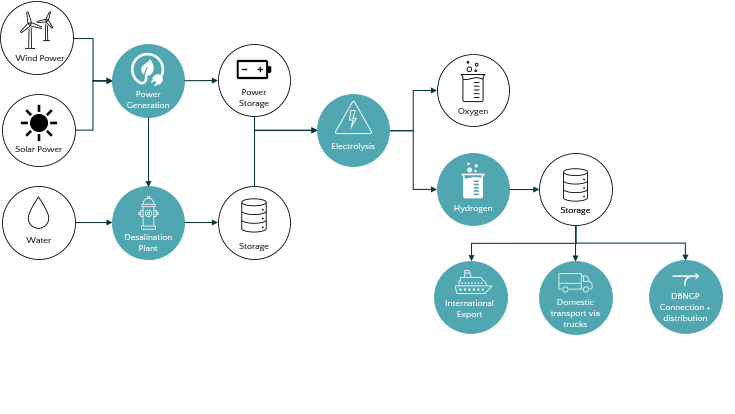
Renewable (green) hydrogen is hydrogen produced using electricity from renewable energy sources and water. This process delivers a clean zero carbon gas or liquid hydrogen fuel.
Water

Renewable Electricity
Electrolysis
O2
H2
Mobility
Industry
Gas Grid
Why Carnarvon?
Sun
very high irradiance
Wind
4th windiest location in WA
Water
sea water
Infrastructure
Dampier to Bunbury gas pipeline & NW Hwy
Landuse
very flat, low intensity landuse
Market
good access to domestic and Asian markets
Regulatory
existing runway, strong local, state and federal support for green Hydrogen
Production Concept
Project Benefits
The HyEnergy® Project is proposed to generate 550,000 tpa of green hydrogen.
We believe that the HyEnergy® project will contribute significantly to the national, state and local objectives by:
- attracting new investment
- creating new jobs
- developing renewable energy sources
- help establish the state government’s goal of 10% green hydrogen in the DBNGP by 2030
- opening new domestic & export markets
- meeting our decarbonisation goals as a Nation
We look forward to working with Traditional Owners, government, local communities and other stakeholders to realise this exciting new project.
World Class Wind & Solar Resources

HyEnergy® Carnarvon project site in the Gascoyne region in Western Australia has world class solar and wind resources.
Significantly, those resources are complementary and provide reliable zero carbon power.
Net Zero Policy is Going Global
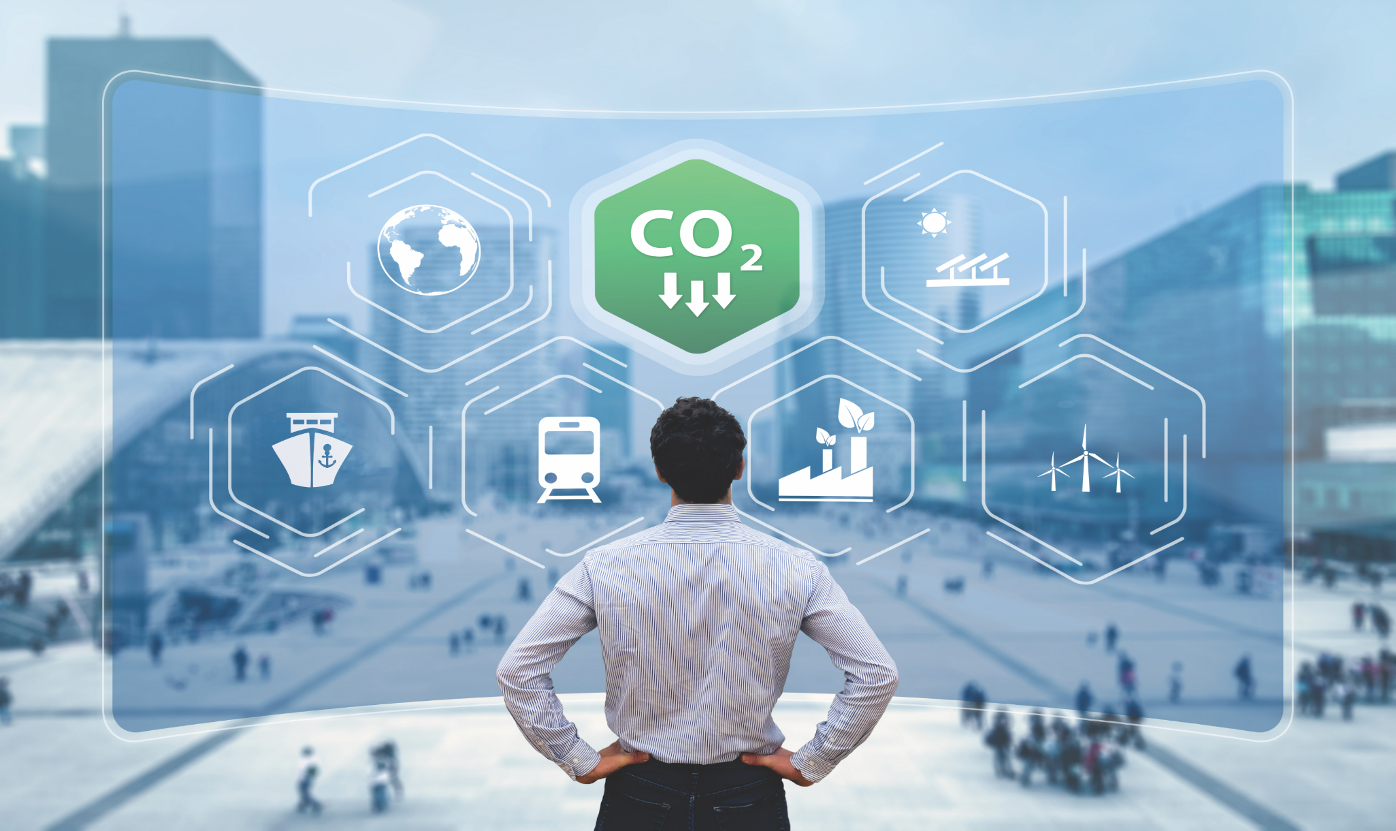
Nearly half of the globe has already embraced net zero CO2 emission policies.
Growing Demand For Hydrogen
Australia’s potential zero carbon hydrogen exports could reach $2.2 billion by 2030.
Supportive Government Initiatives
The COAG Energy Council has approved the development of a National Hydrogen Strategy.
“The potential to export clean hydrogen is substantial, with the International Energy Agency and the World Energy Council both identifying Australia as a potential hydrogen production powerhouse. We can become a leader in the new industry I call ‘shipping sunshine’, with our hydrogen exports being additional to our other energy exports.”

Dr Alan Finkel AO
Australia’s Chief Scientist