
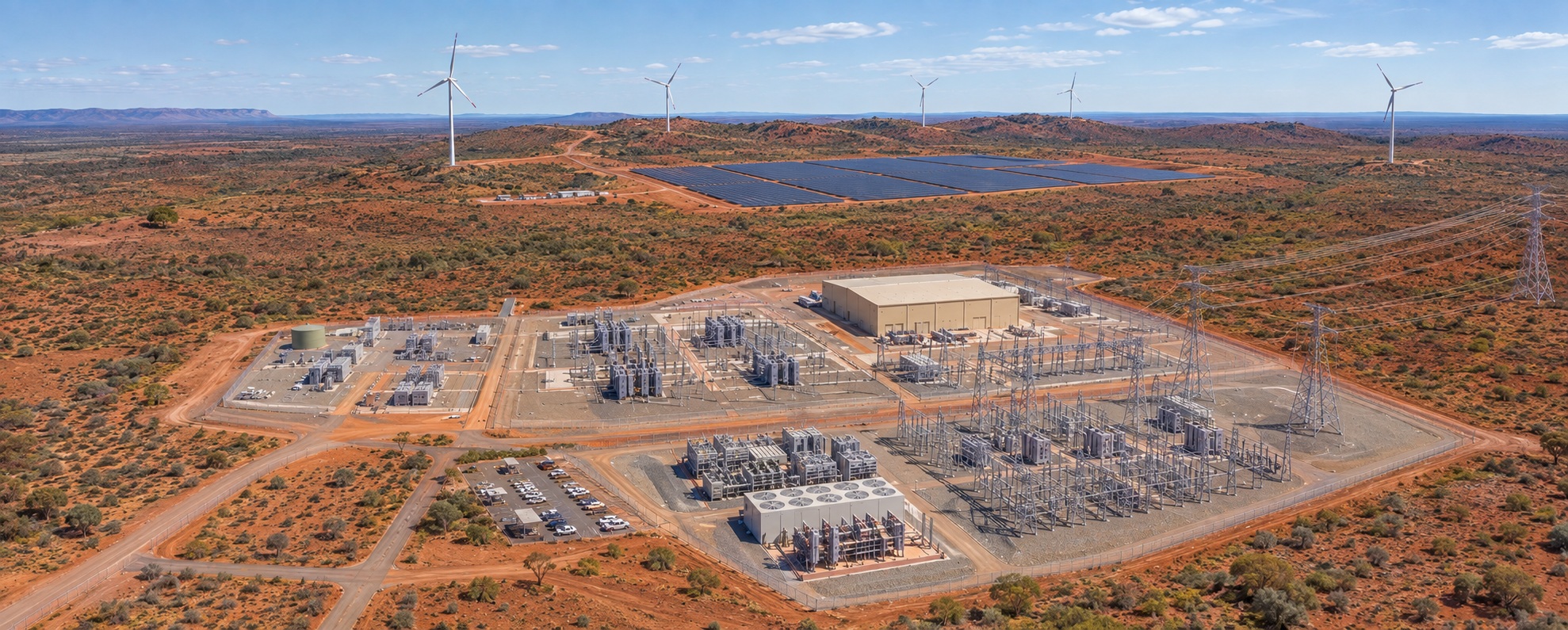

HyEnergy® High Voltage Direct Current (HVDC) Project
The Next Generation of Energy Infrastructure
About
HyEnergy®
4.15 GW HVDC transmission link connecting Western Australia to South Australia
- 3 GW of wind generation
- 3 GW of solar generation
Potential expansion pathway to more than 40 GW of renewable generation capacity
More than $12 million invested in technical studies, environmental assessments and stakeholder engagement
Located in the Gascoyne region, recognised as one of Australia’s highest-quality renewable energy zones
Connecting Australia’s Renewable Energy Future
Province Resources is advancing the WA-SA Energy Link Project, a nation-building renewable energy and transmission initiative based in Carnarvon, Western Australia.
Building on more than five years of wind resource assessment, extensive environmental and technical studies, and strong support from Traditional Owners, local communities and government stakeholders, the project represents a transformative opportunity for Australia’s energy future.
The WA-SA Energy Link combines world-class renewable energy resources in Western Australia’s Gascoyne region with a proposed 2,800-kilometre High Voltage Direct Current (HVDC) transmission system connecting Western Australia to South Australia to connect into the National Electricity Market (NEM). The project is designed to deliver more than 20,000 GWh of low-cost renewable electricity annually while strengthening national energy security and supporting Australia’s net-zero emissions ambitions.
A Nation-Building Energy Infrastructure Project
The HyEnergy® WA-SA Energy Link has the potential to become the backbone of a future Australian Super Grid, connecting renewable energy zones across the continent and leveraging Australia’s diverse weather patterns and time zones to improve reliability and reduce energy costs.
By interconnecting Australia’s electricity networks, the project would:
- Increase national energy security and grid resilience
- Support decarbonisation across multiple states and industries
- Reduce reliance on large-scale battery storage and firming requirements
- Enables future interconnection opportunities with Queensland, the Northern Territory and Western Australia’s SWIS and NWIS networks
- Unlock renewable energy development in remote regions with world-class wind and
solar resources
Why HVDC will deliver for WA and the nation – renewables power
HyEnergy® WA-SA Energy Link will work due to its exceptional solar resource which will provide substantial reliable baseload power to the East Coast during evening peak periods. It complements East Coast solar and extends evening penetration of solar power to customers
- Wind can provide energy during night-time periods when demand is lower
- A large Wind Farm in the Gascoyne with exceptional capacity factors and high mean wind speeds reduces the frequency and duration of low power events compared to other locations
- Studies undertaken show that wind generation at large scale (separated by 100’s or 1000’s of km) dramatically reduces occurrence of low power output. This reduces reliance on energy storage (BESS) and firming.
- Similarly averaging reduces peak output and smooths production which make transmission more efficient and cost effective.
- Gas is the ideal Pinch Hitter. HyEnergy® is ideally supported by natural gas for firming. Gas is low cost, reliable and quick to respond. It is available via existing DBNGP to Carnarvon.
- Lower reliance on gas significantly reduces emissions. It allows future technical solutions to be deployed pre-2050 without compromising on renewable targets
Regional Benefits to Western Australia
The project is expected to deliver substantial benefits to regional Western Australia, including:
- Creation of local jobs during construction and operations
- New economic opportunities for the Carnarvon and Gascoyne regions, including a new port
- Long-term partnerships with Traditional Owners and local communities
- Opportunities for remote Aboriginal communities to participate in renewable energy development, operation and maintenance
- Support for industrial growth and investment in regional Australia
Supporting Australia’s Energy Transition
The HyEnergy® WA-SA Energy Link would create a platform for future renewable energy industries, including hydrogen, ammonia and green methanol production, while also supporting the decarbonisation of mining and industrial operations located near the transmission corridor.
Province Resources believes the project has the potential to become one of Australia’s most significant renewable energy infrastructure developments, helping deliver affordable, reliable and sustainable energy for future generations.
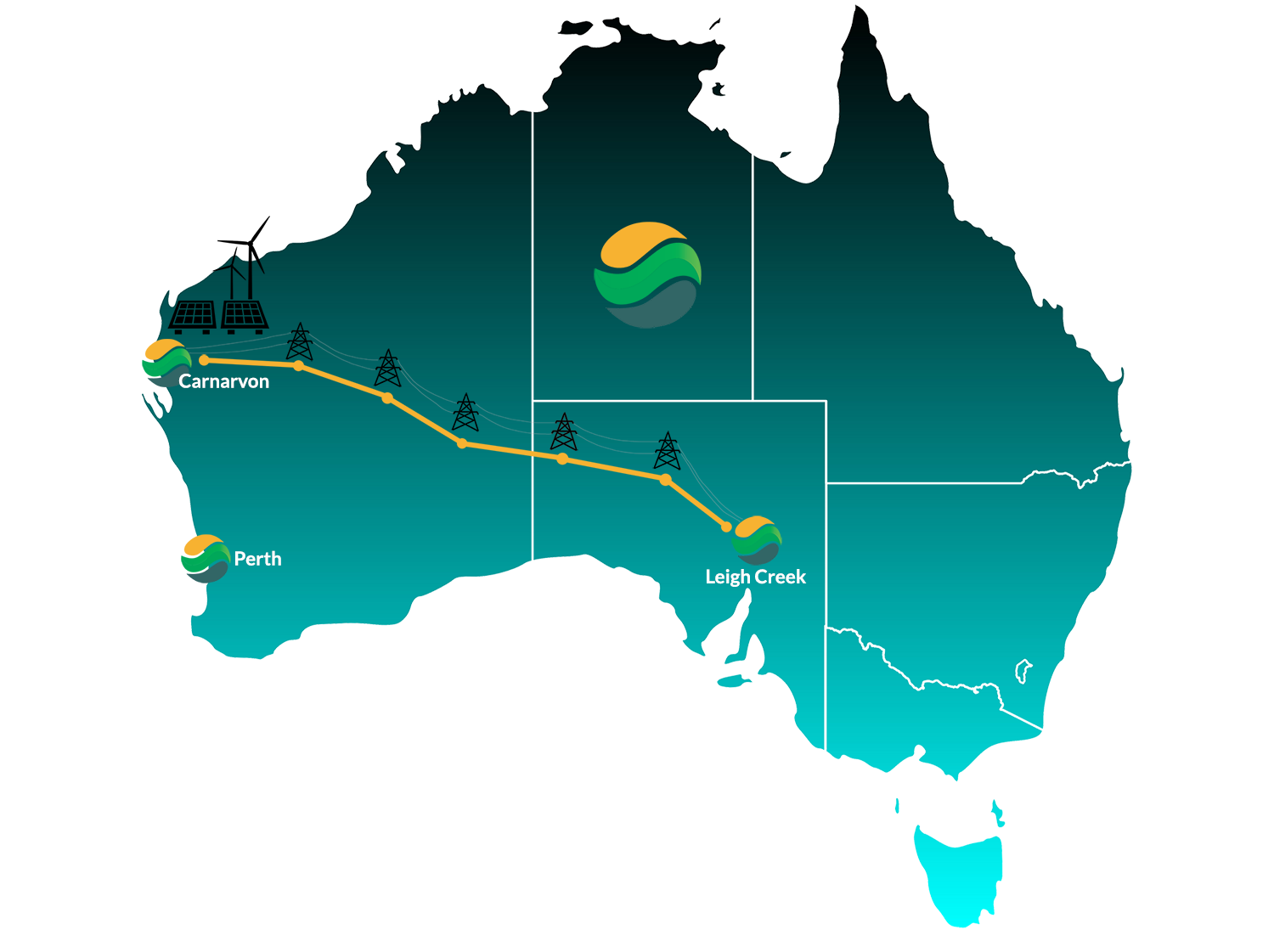
About HVDC – an advantage for new power generation
What is HVDC?
High Voltage Direct Current (HVDC) is a technology used to transmit electricity over long distances more efficiently than traditional alternating current (AC) transmission systems. Electricity generated from renewable energy sources such as wind and solar is converted from AC to DC, transmitted through high-voltage transmission lines, and then converted back to AC at its destination for use by homes, businesses and industry.
HVDC technology has been deployed globally for more than 70 years and is widely regarded as the preferred solution for transmitting large amounts of electricity over distances greater than approximately 500–800 kilometres.
Why is HVDC Important?
As countries transition to renewable energy, generation is increasingly located in remote areas with the best wind and solar resources, often thousands of kilometres from major population centres.
HVDC enables these renewable energy resources to be connected to electricity markets efficiently, reliably and at scale.
HVDC has the potential to unlock world-class renewable energy resources in regions such as Western Australia to connect and transport power to the National Energy Market (NEM) for critical electricity supply.
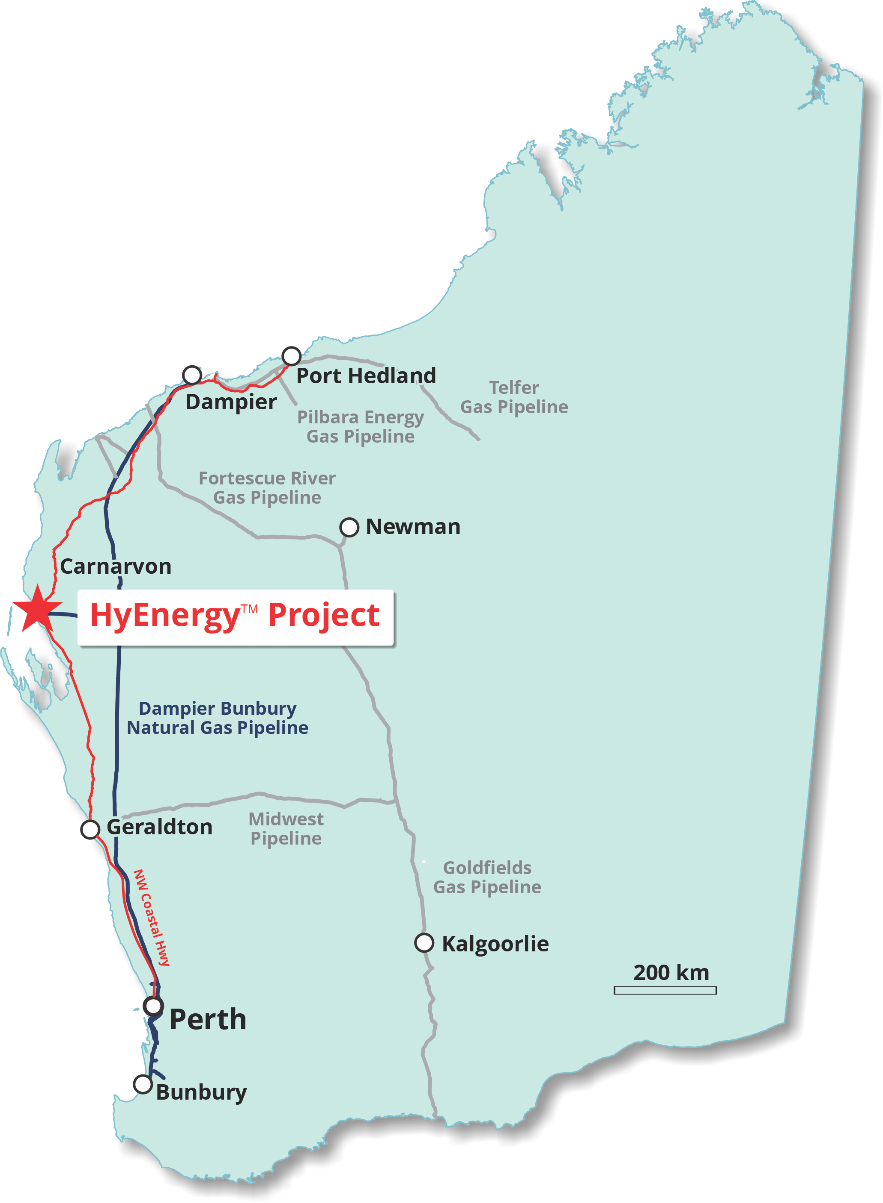
Why Carnarvon?
Sun
very high irradiance
Wind
4th windiest location in WA
Water
sea water
Infrastructure
Dampier to Bunbury gas pipeline & NW Hwy
Landuse
very flat, low intensity landuse
Market
good access to domestic and Asian markets
Regulatory
existing runway, strong local, state and federal support for green Hydrogen
Key Benefits of HVDC
Lower Transmission Losses
HVDC systems experience significantly lower energy losses over long distances compared with conventional AC transmission. This means more electricity generated reaches consumers, improving efficiency and reducing overall system costs.
Supports Large-Scale Renewable Energy
HVDC can transport large amounts of renewable electricity from remote wind and solar projects to major demand centres. This allows Australia to fully utilise its world-class renewable energy resources.
Improved Energy Security
Interconnected electricity networks are more resilient and reliable. HVDC links allow regions to share electricity during periods of high demand, generation shortfalls or extreme weather events.
Reduced Power Costs
By connecting low-cost renewable generation to larger markets, HVDC can increase competition, improve supply and help reduce wholesale electricity prices over time.
Grid Stability and Reliability
HVDC systems provide precise control of power flows, helping grid operators manage fluctuating renewable generation and maintain system stability.
Creates a Renewable Energy Backbone
HVDC projects can form the foundation of future “super grids” that connect multiple renewable energy zones across regions and countries.
Why HVDC is Relevant for Australia
Australia possesses some of the world’s best wind and solar resources, but many are located far from major electricity demand centres.
A national HVDC backbone could:
- Connect Western Australia with the National Electricity Market
- Improve reliability and energy security
- Reduce the need for expensive energy storage and firming
- Enable large-scale renewable energy exports
- Support Australia’s Net Zero commitments
- Unlock economic development in regional and remote communities
Australia’s vast geography makes HVDC particularly attractive because it is specifically designed for long-distance transmission.
Australian HVDC Projects
Basslink
Basslink is Australia’s most well-known HVDC project.
- Connects Tasmania and Victoria
- Approximately 370 kilometres long
- Capacity of approximately 500 MW
- Allows electricity trading between Tasmania and the National Electricity Market
Basslink has operated since 2006 and demonstrates the benefits of connecting geographically separated energy markets.
Marinus Link
- HVDC connection between Tasmania and Victoria
- Two cables with a combined capacity of up to 1.5 GW
- Designed to unlock Tasmania’s renewable energy potential and improve east coast energy reliability
Global HVDC Project Examples
Northsea Link
- World’s longest subsea electricity interconnector at commissioning
- Approximately 720 kilometres
- Connects the UK and Norway
- Capacity of 1.4 GW
Allows renewable hydroelectric and wind resources to be shared between countries.
Xiangjiaba–Shanghai HVDC
- Approximately 2,000 kilometres
- Capacity of 6.4 GW
- One of the world’s largest HVDC transmission projects
Connects western China’s hydro resources to eastern population centres.
Rio Madeira HVDC System
- More than 2,300 kilometres
- Capacity exceeding 7 GW
- Connects remote hydroelectric generation to major cities
NordLink
- 1.4 GW capacity
- Connects Germany and Norway
- Supports renewable integration across Europe
Changji–Guquan HVDC
- Approximately 3,300 kilometres
- Capacity of 12 GW
- One of the most powerful HVDC systems ever built
Demonstrates the ability of HVDC technology to move vast quantities of electricity across continental-scale distances.
Building Australia’s Renewable Energy Future
A national HVDC network has the potential to become the backbone of Australia’s future energy system, connecting renewable energy zones across the country and linking regions with different weather patterns and demand profiles.
This approach can improve reliability, reduce the need for energy storage and firming infrastructure, and unlock significant new investment opportunities across regional Australia.
HVDC is increasingly recognised as essential infrastructure for the global energy transition. More than 300 HVDC projects have been commissioned worldwide, with many countries
investing in new interconnectors and renewable energy corridors to improve energy security and accelerate decarbonisation.
For Australia, HVDC presents a unique opportunity to connect world-class renewable energy resources with major population centres, creating a more reliable, affordable and sustainable electricity system while supporting regional economic development and national energy security.
Projects such as the proposed XX Energy Link demonstrate how HVDC technology could connect Western Australia’s world-class renewable energy resources with growing electricity demand in other parts of the country, creating a truly interconnected national energy market.
Why HVDC Matters for Australia’s Energy Security
Australia is undergoing one of the most significant energy transitions in its history. As ageing coal-fired power stations retire and electricity demand continues to grow, the nation faces an increasing need for new generation, storage and transmission infrastructure to maintain reliable and affordable power.
The Australian Energy Market Operator (AEMO) has repeatedly highlighted the importance of timely investment in transmission infrastructure to support reliability and energy security as the energy system transitions toward higher levels of renewable generation. AEMO forecasts reliability risks and potential supply shortfalls across multiple states if critical generation, storage and transmission projects are delayed. (Insert latest AEMO report) HVDC technology provides a strategic solution by enabling large-scale renewable energy resources from remote regions to be efficiently connected to major electricity markets, improving resilience across the national grid.
Strengthening National Energy Security
Australia’s electricity networks have historically developed as separate regional systems. As coal generation retires and renewable energy becomes the dominant source of electricity, backed by natural gas, greater interconnection between regions will become increasingly important.
HVDC infrastructure can help strengthen energy security by:
- Connecting renewable energy zones across multiple states
- Sharing electricity between regions during peak demand periods
- Improving system resilience during extreme weather events
- Reducing dependence on individual generation sources
- Providing access to geographically diverse renewable energy resources
By connecting regions with different weather patterns and generation profiles, HVDC networks can improve overall system reliability while reducing supply risks.
Supporting Australia’s Renewable Energy Transition
Research undertaken by the Australian National University (ANU) has identified large-scale transmission and interconnection as critical components of a reliable, affordable and low-emissions energy future. (insert study)
ANU researchers found that interconnecting electricity networks across large geographic areas improves reliability by allowing renewable energy resources from different regions to complement one another. This enables a more stable electricity system while reducing overall costs and supporting decarbonisation objectives.
Australia’s vast geography provides a unique advantage, with renewable energy resources spread across different climate zones, weather systems and time zones. A connected HVDC network can help capture these benefits by balancing renewable generation across the continent.
Addressing Future Supply Challenges
AEMO’s Electricity Statement of Opportunities (ESOO) has highlighted the need for significant investment in generation, storage and transmission infrastructure to meet future reliability standards and support growing electricity demand. AEMO has forecast reliability risks and capacity shortfalls across parts of the National Electricity Market if infrastructure investment does not keep pace with the energy transition. In Western Australia, AEMO has also identified the need for substantial new investment in generation, storage and transmission as coal-fired generation retires and electricity demand increases.
HVDC projects can play an important role in addressing these challenges by creating new pathways for renewable energy supply, improving access to low-cost generation and supporting long-term system reliability.
“Connecting Western Australia’s exceptional solar and wind energy resources to the National Electricity Market represents a strategic opportunity for the country. Through this proposed 2,800-kilometre HVDC link, we aim to unlock access to abundant clean energy, helping to fortify long-term national energy security.”

David Frances
Managing Director & CEO